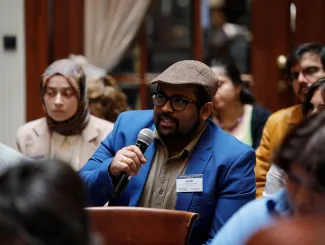
Attending the European Peace Research Association (EuPRA 2026) Conference in Sarajevo, Bosnia and Herzegovina, was not only a rare privilege, but also a powerful reminder of the responsibilities we carry as researchers and practitioners committed to peace, justice, and social transformation. Bringing together scholars and practitioners from across the world, EuPRA2026 was a valuable platform to engage with emerging debates in Peace and Conflict Studies. Yet what I carried away from Sarajevo was not a sense of academic accomplishment, nor the prestige that can sometimes accompany participation in an esoteric conference. Instead, I left with a renewed appreciation of the conference theme itself: “Reclaiming Peace and Cultivating Hope Beyond the Crisis Narrative: Towards Accountability and Action”.
Interestingly, when I left Sarajevo, I was not thinking about the accountability and action of states, international organisations, non-state actors, or private corporations operating in a world shaped by multiple and overlapping crises. Rather, my reflections turned inward. What does accountability mean for me as a practitioner- researcher? How can I be more accountable? How can I better amplify the voices (or silence) and agency of those I research with? How can I ensure that my research is meaningful to the people whose lives and experiences it seeks to understand? And what forms of action should emerge from the knowledge I help to produce?
These are not new questions. They are concerns I have grappled with for several years, particularly through my work in peacebuilding, peace education, and youth engagement. Yet the conference sharpened these reflections, leaving me with more questions than answers. At the same time, it provided fresh insights drawn from the three keynote addresses, a special panel discussion, the panels where I presented my two papers, sessions I attended as a participant, conversations with fellow delegates, and a workshop that, through group dialogue and discussion, affirmed that my curiosity, passion, and commitment to youth-centred peacebuilding are shared by many others working in the field. While it is impossible to reflect on all of these experiences here, I want to focus on two keynote addresses and one workshop that significantly shaped my thinking about accountability, research, and peacebuilding practice.
Who Are We Accountable To?
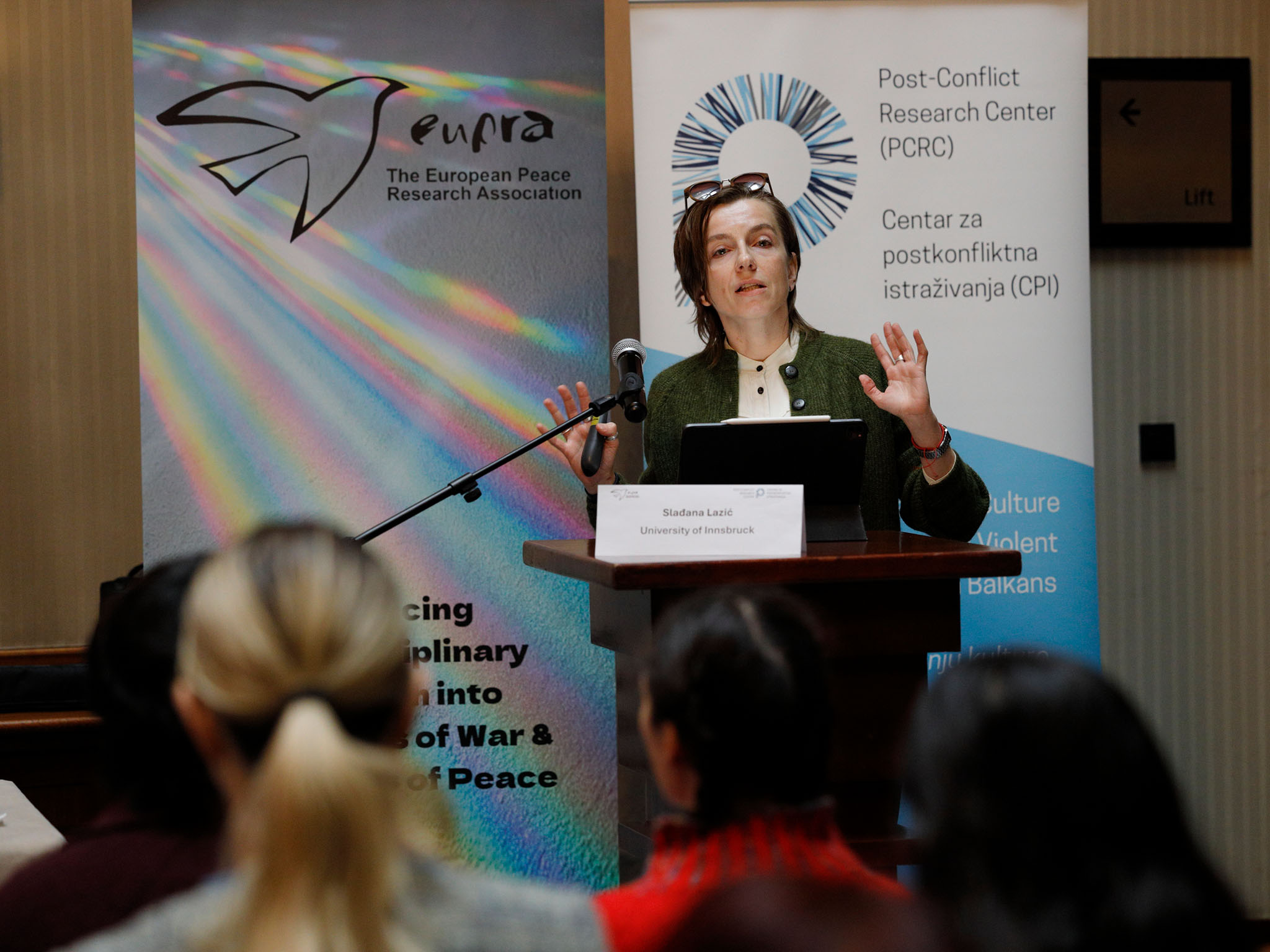
The opening keynote by Dr Slađana Lazić on the politics of knowledge production in Peace and Conflict Studies posed a question that stayed with me throughout the conference. Drawing on Selma Asotić's poem “they descend upon us,” she brought to life the memorable character of "Nick from Connecticut". Long after the keynote ended, Nick remained present in conversations across conference halls, coffee breaks, and lunch tables. Many of us found ourselves asking an uncomfortable question: have we, at some point, become a "Nick from Connecticut" ourselves?
The character represented something familiar. Researchers often enter communities with good intentions, seeking to understand, document, and contribute. Yet good intentions alone do not guarantee accountability. The keynote challenged participants to think critically about who benefits from research, whose perspectives are centred, and what responsibilities researchers carry toward the people whose stories and lived experiences become the focus of academic inquiry
For me, this was an important reminder that research is never a neutral exercise. Our work involves relationships, power, representation, and ethical responsibility. Producing knowledge is not simply about asking questions; it is equally about considering how that knowledge is generated, shared, and ultimately used.
Looking Downward Rather Than Upward
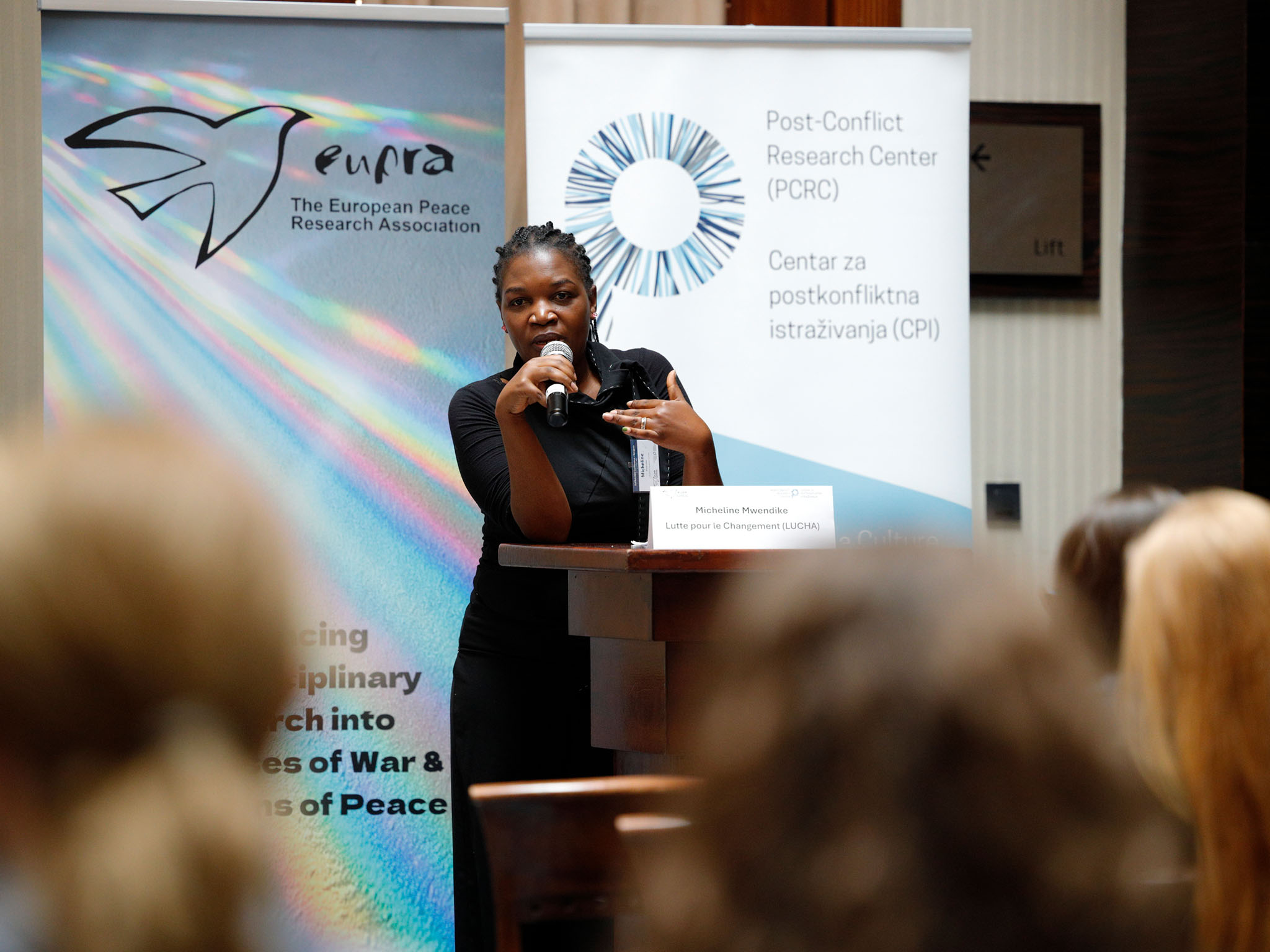
If the first keynote raised questions about accountability, the keynote by Michélie Mwendike deepened them. Drawing on her lived experience as a Congolese activist, she shared the history of Goma and the roots of nonviolent resistance while highlighting the courage, resilience, and commitment required to sustain peace activism under difficult conditions. Yet what resonated most with me was her call to rethink who we are accountable to.
She argued that peacebuilding efforts should be primarily downwardly accountable to the communities whose lives they seek to affect rather than upwardly accountable to donors, funders, and institutional priorities. This distinction may appear simple, but it carries profound implications. It raises a critical question for researchers and practitioners alike: whose needs, voices, and priorities ultimately shape the work we do?
In many sectors, including academia and development, success is often measured through outputs, indicators, reports, publications, and funding milestones. These are undoubtedly important. However, Mwendike's reflections reminded me that such measures should not become ends in themselves. Rather, they should remain connected to the aspirations and realities of the people whom research and peacebuilding initiatives are intended to serve. This lesson extends well beyond peace research. Whether one works in education, community development, public policy, or social activism, genuine accountability begins by listening carefully to those most affected by the issues we seek to address.
Creating Space Rather Than Delivering Solutions
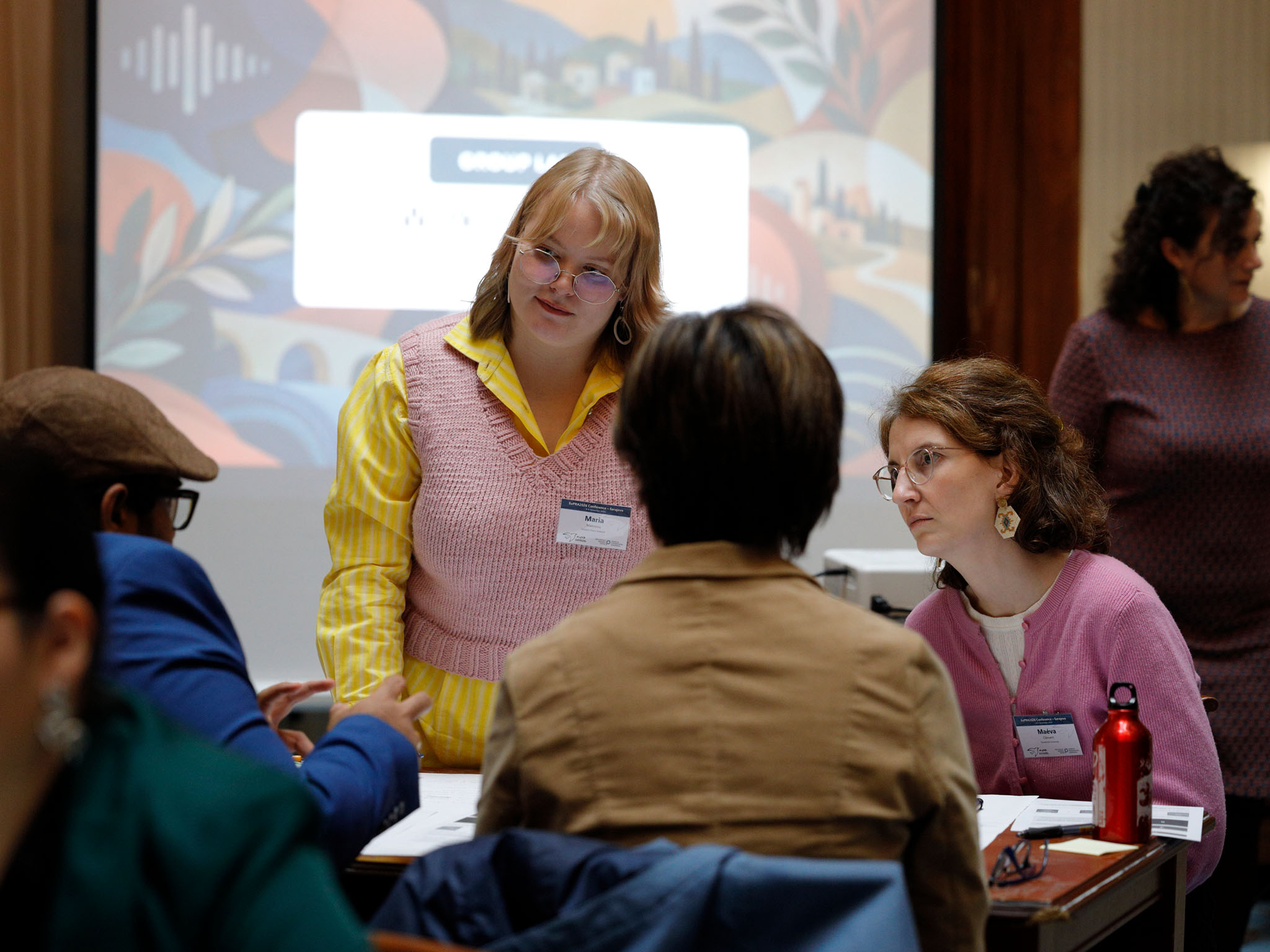
The final conference workshop I attended focused on arts, media, and digital peace practices. It was one of the most engaging and thought-provoking sessions of the conference, facilitated by Dr Valentina Baú and Dr Ilaria Tucci. Working in small groups, participants were invited to respond to a realistic peacebuilding scenario. Our group centred on grassroots youth engagement, exploring how spaces could be created for young people to mobilise, build networks, foster trust, and gain recognition as peacebuilders.
What struck me during the exercise was how quickly our discussion shifted away from designing programmes for young people and toward creating opportunities for young people to lead, define priorities, and shape initiatives themselves. We explored how local associations, youth centres, agrarian societies, and other community spaces could serve as entry points for participation. We discussed the role of social media in fostering connection and outreach, as well as the potential of participatory arts practices such as murals, music, theatre, and community art to promote dialogue and collective action. Equally important, we reflected on the challenges such initiatives might encounter, including local resistance, competing interests, resource constraints, and tensions that inevitably emerge when diverse groups work together.
The key lesson was not necessarily a new one, but rather a principle that our group collectively rediscovered and reaffirmed through the exercise: meaningful participation is not about inviting young people into pre-designed spaces. It is about creating conditions in which they can define peace on their own terms, articulate their own priorities, and shape the processes that affect their lives.
Lessons from Sarajevo
Sarajevo was not simply a conference venue. It is a city whose history continues to shape global conversations about conflict, memory, reconciliation, resilience, and peacebuilding. Walking through the city, visiting Gallery 11/07/95 on the Srebrenica genocide, and engaging in discussions about peace felt like a reminder that research is never detached from lived realities. Behind every concept, framework, and theory are real people whose lives have been shaped by violence, inequality, exclusion, and efforts to transform them.
As a peace researcher from post-war Sri Lanka, this prompted me to reflect more deeply on my own positionality and the experiences, assumptions, and responsibilities I bring to this work. I did not leave Sarajevo with definitive answers. If anything, I left with more questions. Yet perhaps that is one of the most valuable outcomes of gatherings such as EuPRA. Conferences are often judged by the knowledge they produce, but sometimes their greatest contribution is the questions they compel us to keep asking.
For me, the most important question remains one of accountability. Not accountability as a slogan or conference theme, but accountability as a daily practice. Accountability in how we conduct research. Accountability in whose voices we amplify. Accountability in how we use knowledge. And accountability in ensuring that our work contributes, however modestly, to the people and communities whose lives inspire it.
Those are questions I brought back from Sarajevo. They are also questions I hope to carry forward in my own work long after the conference itself has ended.
Photo Credits: Vanja Čerimagić